
Protecting Affordability for Seniors: Highlights from BMA’s July Event
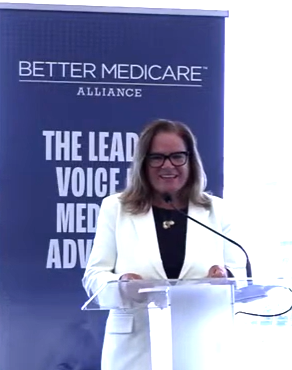
With healthcare affordability top of mind in Washington and for millions of Americans across the country, Better Medicare Alliance convened its first-ever Protecting Affordability for Seniors event July 22 in Washington, D.C., to discuss how Medicare Advantage is leading the way to address this urgent concern.
Fewer Americans than in the past five years say they can consistently afford the healthcare they need, and rising costs are increasingly shaping how people think about their coverage. But Medicare Advantage is flipping the script: delivering high-quality care at a lower cost than traditional Fee-For-Service Medicare, with additional important financial protections like out-of-pocket caps and access to $0 premium plans. Medicare Advantage makes it possible for seniors to afford the care they need.
BMA brought together CMS leadership and a diverse group of allies to discuss how Medicare Advantage is a crucial part of the solution to the nation’s healthcare affordability crisis — and a model for the system.
A candid conversation with CMS
The first panel brought together Alec Aramanda, principal deputy director at CMS, and Gita Deo, senior adviser and chief of staff at the CMS Innovation Center. Both pointed to what makes Medicare Advantage structurally different: Plans are embedded in communities, giving a closer line of sight into the day-to-day factors that shape a beneficiary’s health.
Aramanda made the case directly: “MA has this built-in structure so that people or plans… are looking out for the whole person,” with “incentives for prevention, for wellness, for a relationship with the patient that fee-for-service doesn’t lend itself to.”
Deo echoed that point from the Innovation Center’s vantage point, noting that MA’s local connections with beneficiaries go further than what original Medicare has traditionally been able to build. Both pointed to that same transparency as proof of what Medicare Advantage is already delivering for seniors.
The data behind MA affordability
Rose Mollitor of ATI Advisory walked through BMA’s new cost protections analysis, confirming that Medicare Advantage beneficiaries spend less than those in Fee-for-Service Medicare while receiving the same or better-quality care.
In 2023, Medicare Advantage enrollees spent $2,824 (36%) less out-of-pocket than Fee-for-Service enrollees, a gap that widened by 16% from the year prior.
MA enrollees were also 15% more likely to receive an annual wellness visit and reported comparable satisfaction with the quality of their care overall.
These findings are consistent across income levels, geography, race and ethnicity, and chronic condition status — reinforcing that Medicare Advantage is providing cost savings to beneficiaries across the board.
What affordability means in practice
The closing ally panel, moderated by HealthInsights.ai Founder Jenni Gudapati, a nurse by background, brought the data down to ground level. Gudapati opened by noting that policymakers are now “being receptive to stakeholder input” in a way she hasn’t seen before in her three decades in the field.
Bob Blancato, executive director for the National Association of Nutrition and Aging Services Programs, argued that affordability is inseparable from a senior’s ability to live independently and safely, pointing to supplemental benefits and care coordination as proof that the program treats the whole person, not just the diagnosis. Rebecca Kirch of the National Patient Advocate Foundation pushed that point further, arguing that coordination only works if it’s built into the system rather than left to chance. “Care coordination is essential, but it has to be an accountable piece of the infrastructure of accountable care organizations and value-based care,” she said.
SNP Alliance President and CEO Mike Cheek noted that special needs plans are looking to work with CMS on a VBID 2.0 sandbox, a new testing ground for value-based models to keep refining what works for the populations they serve. Between aging services, patient advocacy, and special needs plans, these three allies approach affordability from different corners of the healthcare system, yet each pointed to the same conclusion: Medicare Advantage’s model of coordinated, whole-person care is what makes affordability possible for the seniors they serve.
As policymakers continue to discuss solutions to make healthcare more affordable for all Americans, we look forward to serving as a partner to show what is possible with Medicare Advantage — and what the program is already delivering for more than 35 million seniors and people with disabilities.